
How the Army Ditched the Beretta, Snubbed GLOCK, & Bet Big on SIG—Was It Worth It? ~ VIDEO
When the U.S. Army dropped the hammer on Beretta’s long-serving M9 and picked the SIG P320 (designated M17/M18) as its new sidearm, it kicked off one of the most debated military weapons transitions in recent memory. James Reeves’s recent video lays out the drama behind the decision, and with help from military reports, contract data, and soldier feedback, we can now piece together the full story behind this $580 million call—and its consequences.
The Beretta M9: Outdated or Underappreciated?
Let’s be honest: the M9 had a heck of a run. It replaced the 1911 in the 1980s after blowing it away in trials—proving ten times more reliable with fewer malfunctions and better service life. It met NATO’s 9mm standard, performed well in brutal mud, saltwater, and drop tests, and was adopted by multiple branches of the U.S. military.

But time caught up with the M9. By the early 2000s, troops in Iraq and Afghanistan reported reliability issues—especially in dusty environments. Some blamed the open-slide design, others pointed to the Army’s decision to cheap out on magazines. Instead of sourcing mags from Beretta or Mec-Gar, they bought cheaper versions from Airtronic with a gritty phosphate coating that didn’t play well with fine desert dust. That mistake alone caused a wave of failures to feed.
Add to that: the M9 Handgun lacked a rail for mounting lights, its grip wasn’t modular or ergonomic for smaller hands, and field maintenance was a pain. According to a Center for Naval Analyses study, less than 60% of M9 users were satisfied with the pistol—the lowest score of any small arm in the survey.
Enter the M9A3: The Upgrade That Wasn’t
Beretta responded with the M9A3 pistol, a thoroughly modernized version of the M9: new internals, modular grips, factory rail, and a redesigned safety that solved some long-standing issues. Even better, Beretta offered it for less than the original M9’s cost.
But in 2015, the Army flat-out rejected the proposal without even testing it. Why? Because by then, the Army had already committed to starting from scratch with a new weapon system—one that prioritized modularity, accessories, and adaptability for a wide range of users and missions.
Beretta argued that upgrading to the M9A3 could save the government hundreds of millions. But the Army wasn’t interested in saving an old platform—it wanted a clean slate.
The Modular Handgun System (MHS) Trials: SIG vs. GLOCK
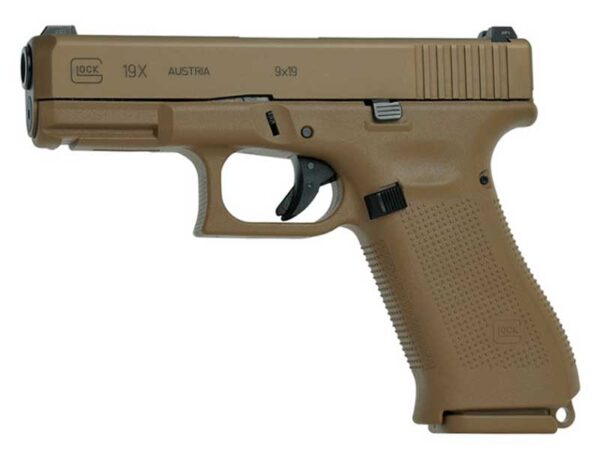
The Army’s Modular Handgun System (MHS) competition kicked off with a long list of requirements: adaptability for left- and right-handed users, compatibility with suppressors, easy mounting of optics, different grip sizes, and more. Contrary to what many in the gun community believed, the competition wasn’t rigged in favor of SIG’s chassis-based fire control unit (FCU). The Army didn’t demand a chassis system—it just wanted flexibility.
That’s why GLOCK made it to the final round with its 19X—a solid, rugged hybrid that met most requirements, even without a chassis FCU. In fact, according to the Government Accountability Office (GAO), GLOCK’s 19X was more reliable and more accurate in some phases of testing.
So why didn’t it win?
Two reasons: cost and contract timing.
SIG offered a much cheaper deal—over $100 million less than GLOCK. And while the MHS tests were expected to go up to 35,000 rounds, SIG was reportedly selected after only 12,500 rounds. GLOCK challenged the decision, arguing that longer-term flaws might have surfaced with extended testing. The GAO didn’t disagree, noting “multiple evaluation errors,” but ultimately sided with the Army due to the cost savings.
Live Inventory Price Checker
| Glock 19X 9mm 10-Round Factory Magazine | GunMag Warehouse | | |
| Glock 19X 9mm Pistol w/ Glock Night Sights – 19rd | Rainier Arms | | |
| Glock 19X 9mm Pistol With Glock Night Sights, Flat Dark Earth – UX1950703 | Palmetto State Armory | | |
| Glock 19X 9mm 19 Round Extended Magazine (6 Pack) | The Mag Shack | |


Early Reliability Concerns: SIG’s Bumpy Start
After adoption, the SIG P320 (M17/M18) quickly faced scrutiny. Reports surfaced of drop-fire issues (a gun discharging when dropped) and uncommanded discharges. The Army downplayed the reports and said all weapons met safety standards. SIG eventually made design changes—updating the trigger, slide geometry, internals, and magazine components.
A 2017 Pentagon report revealed that with standard ball ammo, the M17 averaged just 343 rounds between stoppages—far lower than the M9’s 1,700+. The compact M18 fared even worse at 197 rounds. But when tested with the military’s preferred 147-grain hollow points, the new SIGs performed much better—approaching 2,000 rounds between failures. Still, the early hiccups and ongoing lawsuits continue to cast a shadow over the platform.
Was the Army Too Hasty?
Looking back, there are valid concerns:
- The Army refused to even consider Beretta’s cheaper, upgraded M9A3.
- The testing process was cut short.
- GLOCK’s protest highlighted potential flaws that may have gone unaddressed.
- SIG’s initial performance with ball ammo was questionable—yet the decision was locked in.
To be fair, it’s not the first time a new military pistol had problems. Even the M9 had slide separation issues early in its service life. And SIG did fix many of the reliability problems within a year or two.
Still, it’s fair to ask: was saving $100 million worth the trade-off in testing rigor?
Final Thoughts
Whether you’re team SIG, team GLOCK, or still rocking a classic Beretta, one thing’s clear: the Army’s move to replace the M9 wasn’t just about performance—it was about modernization, modularity, and long-term costs.
But as James Reeves rightly points out, we’re still living with the consequences of that decision. Lawsuits are mounting. Controversy continues. And soldiers are the ones carrying the results.
What do you think? Did the Army make the right call? Or did they rush a half-tested platform into service to save a buck?
Hat tip to James Reeves for sparking this conversation and breaking it all down in his detailed video embeded above. Watch it if you haven’t already—it’s essential viewing for anyone who cares about how decisions are made in military procurement.
Air Force Pauses Use of Sig Sauer M18 Handgun After Airman Killed
The Ultimate Home Defense Glock Build Part 1: Budget Blaster ~VIDEO
Read MoreAmmoLand Shooting Sports News