
Shotgun, Rifle, or Pistol: What’s Best for Home Defense? Vortex Nation Breaks It Down ~ VIDEO
When something goes bump in the night, what’s your move? Are you grabbing the trusty 12-gauge, racking your AR, or reaching for the pistol in the nightstand?
It’s a question every responsible gun owner wrestles with at some point: What’s the best firearm for home defense? The truth is, there isn’t a one-size-fits-all answer—but let’s break it down in plain English.
Why the Gun Choice Matters
Your home is your castle. And if danger ever comes through your door, you want to be ready to defend it—and your family—with confidence. But the “best” tool depends on your living situation, training, and what you’re comfortable running under stress.
Two seasoned shooters from Vortex Nation recently put this debate to the test in their latest video, above, with drywall, ballistic gel, and some high-tempo drills. Here’s what we learned—and how you can apply it.
The Case for Each Weapon Platform
Shotgun: King of Close Quarters
The 12-gauge is a devastating tool at close range. Loaded with buckshot or even a slug, it delivers incredible stopping power. And with a pump-action like the Mossberg 590, you’ve got flexibility to load everything from birdshot to slugs.
In testing, buckshot put multiple projectiles on target simultaneously, creating an enormous wound cavity in ballistic gel. Even low-recoil birdshot—usually dismissed in defensive talk—showed surprising effectiveness within a home-defense distance.
Pros:
 Massive stopping power
Versatile ammo options
Great intimidation factor
Cons:
 Can be unwieldy in tight hallways
Overpenetration risk with slugs or heavy buckshot
Slower reloads under pressure
Pistol: Quick, Light, and Nimble
The handgun shines for maneuverability and one-handed use. Whether it’s keeping a hand free for dialing 911, guiding kids to safety, or opening doors, a pistol gives you options.
During the Vortex course, the shooter with a 9mm was able to engage targets effectively—even with a moving threat. Using modern defensive ammo like Hornady Critical Duty, the 9mm showed textbook penetration and expansion in gel testing.
Pros:
Compact and easy to store securely
Can be run with one hand
Faster follow-up shots
Cons:
Requires excellent shot placement under stress
Smaller projectiles mean less energy transfer
Lower capacity than some carbines
Rifle/Carbine: The Modern Defender
Although the video didn’t feature the AR platform specifically as the primary choice, it deserves a mention. AR-15 rifles offer excellent accuracy, higher capacity, and are highly controllable—especially with a red dot.
But overpenetration becomes a big concern. Even lightweight .223/5.56 rounds can zip through drywall and into the next room, which is something every home defender needs to consider.
Pros:
High accuracy and capacity
Low recoil with .223/5.56
Excellent in trained hands
Cons:
Overpenetration in close quarters
Longer length makes them harder to maneuver indoors
Overpenetration: The Elephant in the Room
Every round, from birdshot to 9mm, has the potential to go through drywall. Testing revealed even light buckshot and pistol rounds zipped through walls and into the gel block beyond.
That’s why situational awareness and proper target identification are critical. Know where your family members are and what’s behind your target.
So…Which One Wins?
Here’s the kicker: there’s no “perfect” choice.
If you’ve got tight hallways and young kids, a pistol you can lock up but bring into action fast might be the way to go.
If you live alone in a house and want raw stopping power, the shotgun is hard to beat.
If you’re highly trained and want maximum control and capacity, the carbine might make sense.
The best home-defense firearm is the one you’re trained on, can deploy confidently, and can use effectively in your living environment.
Live Inventory Price Checker
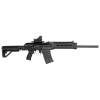
| JTS Shotgun M12AK 12 Gauge Semi-Auto Shotgun, 18.7″ Barrel, Black – M12AKT2 | Palmetto State Armory | | |
| JTS Shotgun M12AK 12 Gauge Semi-Auto Shotgun, 18.7″ Barrel, Black – M12AKT2 | Palmetto State Armory | | |
| Jts Shotgun (xisico Usa) M12ar Semi-Auto 12 Gauge 18.70 3″ 5+1 M12ARB1″ | Ammunition Depot | | |
| JTS Shotguns SS410 Single Shot .410 Gauge 28″ Break Action/Single Shot, Black | Palmetto State Armory | |

Takeaways for Responsible Gun Owners
- Train, train, train. Tools don’t save lives—training does.
- Consider a quality light. Most bad things happen in the dark.
- Secure your firearm. Keep it out of unauthorized hands, but accessible under stress.
- Think through your layout. Walk your home and plan your movements now—not during an emergency.
At the end of the day, what matters most isn’t the caliber or platform—it’s you. Pick the tool that works for your situation, and practice until running it becomes second nature.
What’s your choice for home defense—and why? Let us know in the comments below.
Read MoreAmmoLand Shooting Sports News